![[GAGB logo]](logolge.gif) |
 |
 |
|
|
|
|
|
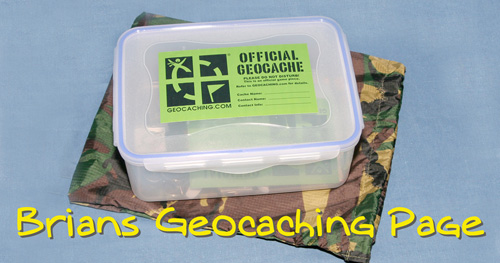
Geocaching (pronounced Geo-Cashing) is like a hi-tech equivalent to Dartmoor Letterboxing (QV), in that you search the countryside for hidden boxes (Caches). Unlike Letterboxes, which contain just an ink-pad and rubber stamp, geocaches typically hold such things as, toys, jewellery, coins, books etc. These items are ‘swappable’ and may be exchanged with other items brought by the finder. There is also a Log Book and pen, in which the finder records his/her visit. The cache container itself is usually a watertight 2.5 litre Tupperware box, or may be an old ‘Ammo’ can. Sometimes the box may be further concealed in a camouflaged bag to make it harder to spot, depending on its hiding place. The only restrictions on location are that the box must not be buried, or situated on private land without permission. Information about the location of all caches is published on a website, www.geocaching.com and is easily available to those wishing to open a (free) account. There are currently over 2 million accounts, worldwide. Entering your post-code on the relevant webpage will give you a list of caches, with the closest to your post-code listed first. Thousands exist, and your local area will be well catered for I’m sure. The cache’s location is given, either directly, or may be derived from a series of ‘clues’ gained from other locations nearby. A bit of detective work may be needed here. Sometimes clues are a bit devious, so some sideways thinking is often necessary too. When you succeed in locating your first cache, you are required to log it, not only by writing in its log book, but, more importantly logging it via the ‘Geocaching’ website. This enables pretty tight control of what goes on, and allows others to see for themselves the history of each cache. This pastime requires accurate navigation to find the exact location of each hiding place. Portable maps are generally not drawn to sufficient accuracy for this, and a GPS receiver is a very necessary tool for the job. These come in all shapes and sizes, some being better than others. We have the American Military (bless them) to thank for the GPS service, which can provide accuracies down to about 5 metres or so. Other contents of the cache may be ‘Travel Bugs’ and ‘Geocoins’, which are really hitch-hikers, travelling from one cache to another. They usually have a ‘mission’ which is intended to direct them in their travels. A TB for instance may be destined, to end up in New Zealand or some other exotic place, similarly with Geo-Coins. Both these and TB’s have a unique number stamped on a ‘dog tag’ attached to them with a short chain. This allows them to be tracked via the website. It is then easy to see where they are at any time, or record where they may have been lost etc. ‘Cachers’ often take photos of these TB’s or Geocoins when they find them, showing them in their new surroundings. The images may then be added to a Picture Gallery, part of the same website. I have recently set up TB’s for each of my granddaughters, and plan to let them track their own, as the TB's travel from place to place – well it’s one way of instilling a bit of simple geography in them I suppose! In addition to hunting for boxes, any Geocacher worth his salt, should be placing some caches of his own. This is quite a simple process, but some planning is necessary. Thought needs to be given to the location and what clues should be made available to potential finders. The new cache must then be registered on the website, ID (Waypoint) numbers obtained etc. The map co-ordinates must also be accurately measured using the GPS receiver, and recorded. What’s the point of all this? Well, apart from being plain good fun, it gets you out of the house, and is especially suitable for families with young children. Kids just love ‘treasure hunting’ and this is about as close as you are likely to get to that. Often, people plan a whole day out ‘caching’ and may get to visit four or five locations in that time. Another benefit is that it leads you to places where otherwise you may never have visited. Discovering new footpaths is also very worthwhile. Website descriptions of each cache often contain much detailed historical information about the area in which it is hidden. This can be an education in itself. I must just add, that there is a down-side to all this. Once you have found your first few caches, there’s a real danger that you may become hooked. Be warned! |
|
Geocaches set by Hamfist |
Travel Bug Dog Tags
 |
 |
|
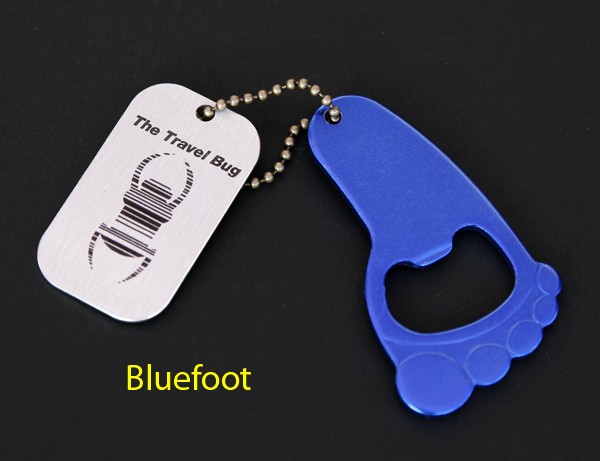
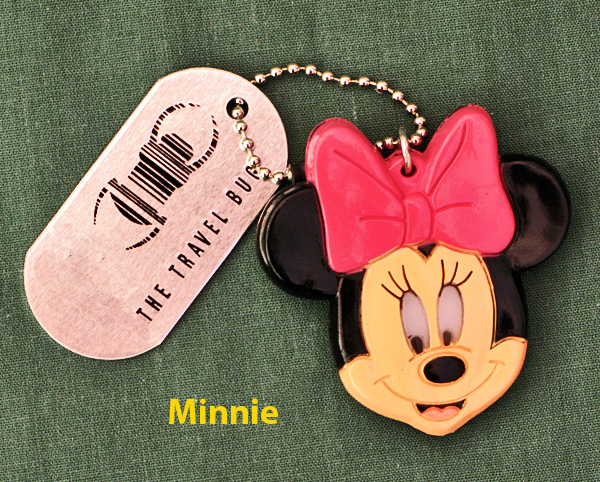
Here are two of our 'Travel Bug Dog Tags' aka TBs Click either image to visit that TB's own web page These pages record the journeys of each TB, and tell you where they were at any time. We shall monitor their journeys around the World as they travel from cache to cache. The TBs are identified by a unique number which is recorded on the Internet at each stage of their journeys. You can also track their travels using Google Earth. The largest distance we have encountered was travelled by a scruffy old bear, which had gone over 31,000 miles! |
|
Hamfist's Travel Bug Tracker Track all our TBs around the World, and those of our friends too! The data automatically updates each time the Bug is moved - Magic! |
|
References: Main Geocaching Website (USA): www.geocaching.com Geocaching Association of Great Britain: www.gagb.org.uk Guide to buying a GPS handheld: Here Letterboxing, A History of : Official Website Resources: Here |